How much to charge for online coaching is the question most new coaches answer by copying someone else’s price. That price was built for someone else’s schedule, costs and audience. A better starting point is your own numbers: what you need to earn, how many clients you can actually serve, and what it costs to run the business.
This guide gives you a method you can redo every few months, a worked example with hypothetical numbers, and sourced market ranges to sanity-check the result. The same method works for online personal training, hybrid coaching and program-only offers.
How do you calculate your online coaching price?
Calculate a floor price from your income target, costs and capacity, then adjust it up for your value and positioning. Five steps:
- 1Set a monthly income targetWhat you want to take home from coaching each month, before tax if that’s how you track income.
- 2Add your monthly costsCoaching software, payment fees, insurance, certification upkeep, phone and any marketing spend. Put taxes in here too if your target is after tax.
- 3Measure time per clientTime one normal week: program updates, check-in reviews and messages. Divide by the number of clients to get minutes per client per week.
- 4Find your realistic client countDivide the hours you want to spend on coaching by the hours per client. Then plan for about 80 percent of that number, because you’ll never be full every month.
- 5Divide and round(Income target + costs) ÷ realistic client count = your floor price. Charging less means you either earn less than you planned or work more hours than you planned.
Example: pricing an online coaching package
This example uses hypothetical numbers to show the math. Replace each one with yours.
- 1Income target$4,000 a month.
- 2Costs$300 a month for software, payment fees and insurance.
- 3Time45 minutes per client per week, and 20 coaching hours a week available, so about 26 clients at full capacity.
- 4Realistic count80 percent of 26 is about 21 clients.
- 5Floor price($4,000 + $300) ÷ 21 ≈ $205 a month.
If $205 sits far above what your niche pays, you have three levers: spend less time per client with better systems, coach more hours, or lower the target. If it sits well below, you’re probably undercharging for the value you deliver.
How much do online coaches charge per month?
Published ranges cluster around $100 to $250 a month per client, but there’s no large independent survey of online coaching prices, so use them only as a check on your own math.
- Precision Nutrition. Its income article says that for very successful coaches, $100 to $200 per monthly client “seems to be a typical range”, while noting that some charge less and some more.
- Gymkee billing data. The coaching software company reports a median of $175 a month, with the middle half between $104 and $245, from its own platform data in August 2026. That’s one platform’s users, not the whole market.
Prices vary with country, niche, experience and what’s included. A coach with daily messaging and video calls can charge more than one who sends a program and a weekly check-in.
Should you charge per month or per session for online personal training?
Charge per month for online personal training. Online clients train without you, so you aren’t selling hours; you’re selling a program, accountability and adjustments. A monthly fee matches that, gives you predictable income and makes it easier to plan capacity. Per-session pricing fits live video sessions, which you can add as a separate item.
How should you structure online coaching pricing tiers?
Build two or three tiers that differ in how much of your attention the client gets, not in how many workouts they receive.
- Program only. A ready plan with no personal check-ins. Lowest price, almost no weekly time from you. Works well as a one-off purchase.
- Standard coaching. A personal program, workout logging, a weekly check-in and messaging with a stated reply time. Most clients should land here.
- Premium. Everything in standard plus calls, nutrition coaching within your qualification or faster replies. Limit the number of spots.
When should you raise your coaching prices?
Raise prices when you’re close to full capacity, when clients stay for several months, or when your results and testimonials have clearly improved. Raise the price for new clients first, and give existing clients written notice and a date before any change applies to them.
How Coach+ fits into your pricing
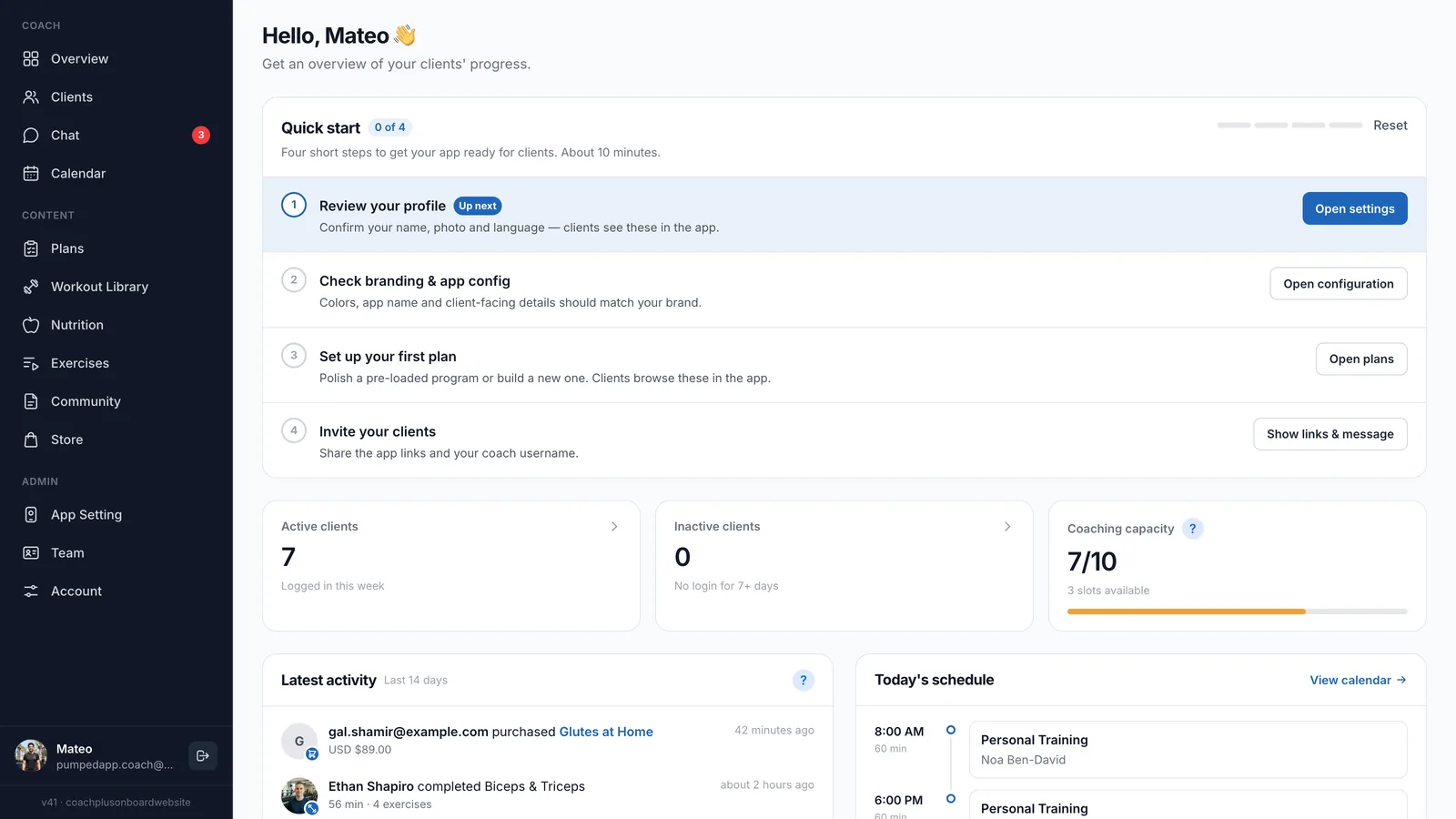
Software is one of the costs in the formula, so its pricing model matters. The Coach+ coaching platform charges a fixed monthly price per plan, not per client, so the software cost per client goes down as you add clients within your plan’s limit.
- A Store for program-only offers, with four price levels from Bronze to Platinum, depending on your plan.
- Calendar services clients book from the app, for the calls in a premium tier.
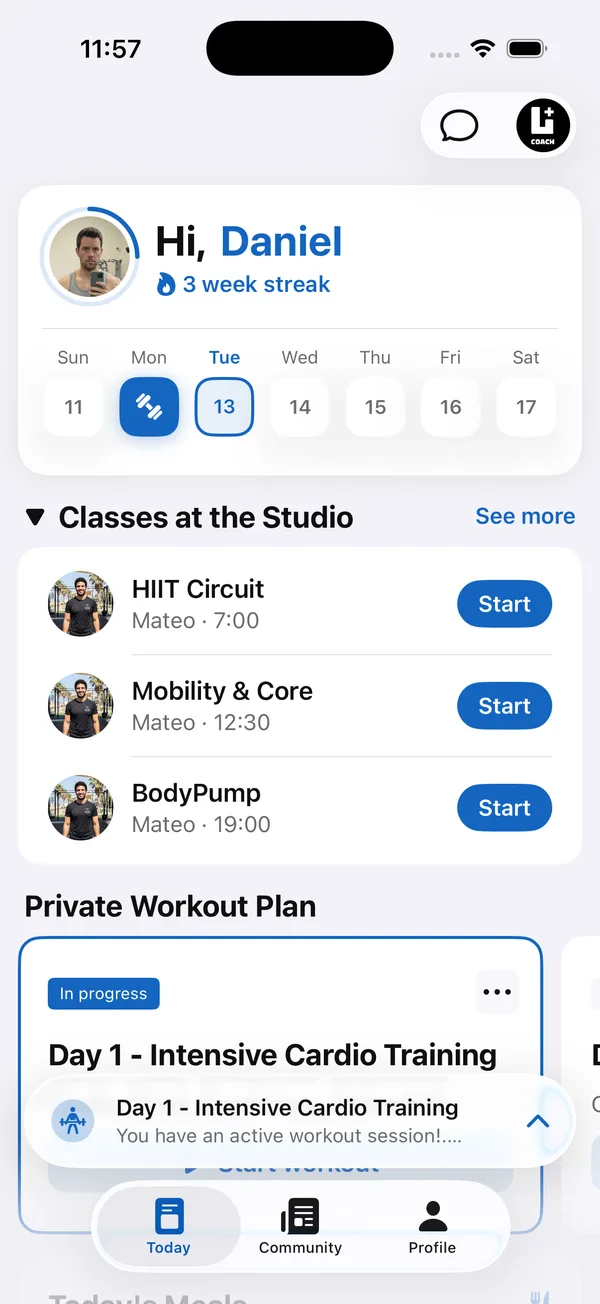
- Every client gets your own branded app, connected to your coach dashboard, which supports a premium positioning.
- Check-ins, workout logs and chat on each client’s profile, which keeps your time per client down.