Most online coaching check-in questions start as a long form and fade out the same way. Week one, every client answers all twenty. By week four, half of them skip it, and you stop reading the long ones anyway.
The problem is rarely the clients. It’s the form and the rhythm around it. This guide gives you a short weekly check-in template, a cadence that holds, and a way of replying that keeps clients sending them.
Why do clients stop sending check-ins?
Usually because the check-in form takes too long, nobody replies, or the day keeps changing.
- It takes too long. If a check-in takes fifteen minutes, it gets pushed to tomorrow, then to next week.
- It asks what you already know. If clients log their workouts, asking how many sessions they did is busywork.
- Nobody answers. Clients stop filling out what doesn’t get a reply. A late or generic reply teaches them the same thing.
- The day keeps moving. A check-in that is due “sometime this week” never becomes a habit.
- It feels like a test. When every check-in is judged by the scale, clients skip the weeks they expect bad news, which are the weeks you need them most.
How often should clients check in?
For most online clients, weekly is the right rhythm. It’s often enough to catch a bad week before it becomes a bad month, and rare enough that it doesn’t feel like homework.
- Same day, every week. Pick one day for everyone, or one day per client, and put it in their calendar at the start.
- Same conditions. Weight in the morning, before eating. Photos in the same spot, same light, same clothes. Otherwise you compare noise.
- Every two weeks for long-term clients. Clients who are maintaining and training on their own can check in less often. New clients and anyone in a diet phase stay weekly.
What questions should an online coaching check-in ask?
Ask about weight, photos, nutrition, sleep, energy and stress, how the body feels, one win and one question. That’s eight items, about five minutes for the client and five for you. Copy this check-in template as is, then cut anything you never act on.
- 1Weightthis morning’s weight, before eating.
- 2Photosfront, side and back, same spot and light as last week.
- 3Nutritionhow many days did you follow the plan, 0 to 7?
- 4Sleeproughly how many hours a night?
- 5Energy and stresseach from 1 to 10.
- 6Bodyanything that hurt or felt off in training?
- 7Winone thing that went well this week.
- 8Questionanything you need from me?
Notice what’s missing: how many workouts they did and what they lifted. If clients log their training, you already have that.
How should you reply to a client check-in?
Quickly, specifically and with one change at most. That is what keeps clients checking in week after week.
- 1Reply the same day or the nextSpeed matters more than length. Three specific lines tomorrow beat a long message next week.
- 2Start with what went wellUse their win, or find one in their logs. It shows you read the check-in, not just the number.
- 3Change one thing at mostOne clear adjustment per week gets done. Four adjustments get ignored.
- 4Compare to last month, not last weekWeight and photos move around from week to week. Put this week next to four weeks ago before you react.
- 5Treat a missed check-in as a signalMessage the same day with a short, friendly nudge. Silence is usually the first step before a client drops off.
How Coach+ handles check-ins
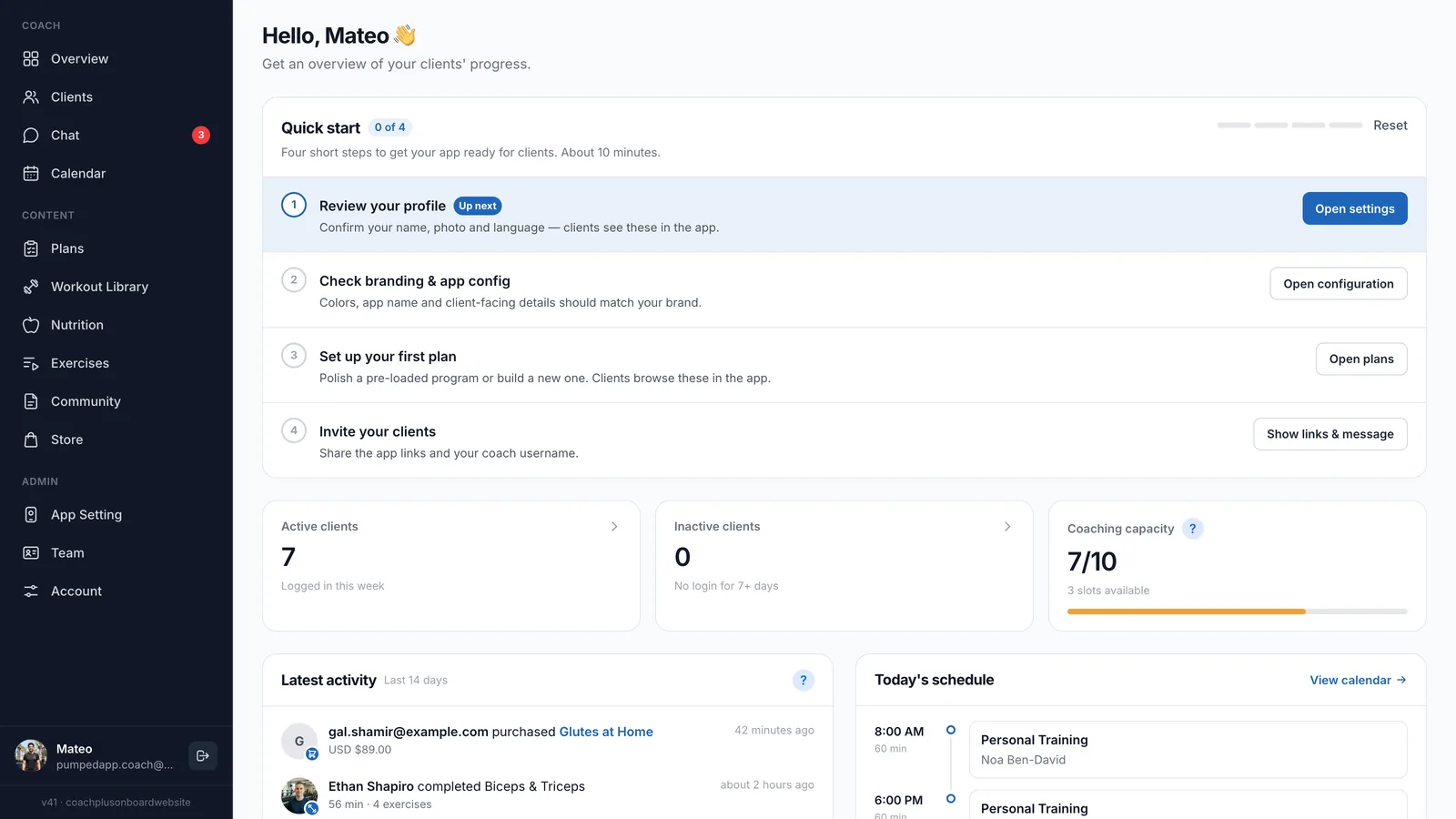
On the Coach+ coaching platform, you work from the coach dashboard and each client checks in from your own branded app, connected to it. A check-in is progress photos and weight, and everything else in the template above runs through chat.
- A Check-in tab on every client profile, with each photo newest first and the weight and date on it.
- Programs your clients log set by set, so training questions are answered before you ask them.
- Measurement charts per client, such as weight, body fat and waist.
- Active and inactive clients on your Overview, so you see who has gone quiet.
- A Message button on each profile that opens your chat with that client, for feedback and the rest of your questions.