This protein calculator gives you a daily protein range in grams based on your body weight and goal, and splits it into four meals. A range is more useful than a single number: the lower end is a solid minimum for the goal, and the higher end leaves room when you train hard or eat less.
Results are estimates for healthy adults and not medical advice. If you have kidney disease or another medical condition, check your protein intake with a doctor.
How to use the protein calculator
- 1
Enter your body weight
Use your current weight. All ranges are per kilogram of body weight.
- 2
Choose your goal
General health, endurance training, muscle gain, or fat loss while strength training.
- 3
Read your daily range
You get a minimum and maximum in grams per day. Pick a number inside it that you can hit most days.
- 4
Check protein per meal
The calculator divides the daily range by four meals. If you eat three or five times a day, divide by that number instead.
How much protein do you need per day?
Most adults need 0.8 to 1.0 g of protein per kg of body weight per day for general health, and more when they train. 0.8 g per kg is the recommended dietary allowance (RDA) for adults, which is set to cover basic needs, not to support training.
General health: 0.8–1.0 g per kg (about 0.36–0.45 g per lb).
Endurance training: 1.2–1.6 g per kg (about 0.55–0.73 g per lb).
Muscle gain: 1.6–2.2 g per kg (about 0.73–1.0 g per lb).
Fat loss while strength training: 1.8–2.4 g per kg (about 0.82–1.1 g per lb).
How is your protein target calculated?
The protein calculator multiplies your body weight in kg by the low and high end of the range for your goal. Protein per meal is that daily total divided by 4.
Example: at 80 kg with a muscle gain goal, the range is 80 × 1.6 = 128 g to 80 × 2.2 = 176 g a day, or 32 to 44 g in each of four meals.
How much protein do you need to build muscle?
To build muscle, aim for 1.6 to 2.2 g of protein per kg of body weight per day, together with progressive strength training and enough total calories.
Protein alone doesn’t build muscle. Training is the signal and protein is the material. Spreading it over three to five meals makes the daily number easier to reach. During fat loss the range rises to 1.8–2.4 g per kg, because a higher intake helps hold on to muscle while eating less.
How coaches set protein targets for clients
For many personal trainers and online coaches, protein is the first nutrition number a new client gets, sometimes before calories. It’s simple to explain, easy to track and relevant to almost every goal.
Start at the low end. A client eating 60 g a day won’t jump to 180 g. Set the lower end of the range and raise it once that becomes a habit.
Translate grams into food. Show what 30 to 40 g looks like on a plate, in foods the client already eats, and plan protein into every meal instead of one big catch-up at night.
Recalculate as weight changes. The target is tied to body weight, so update it after a change of a few kilograms.
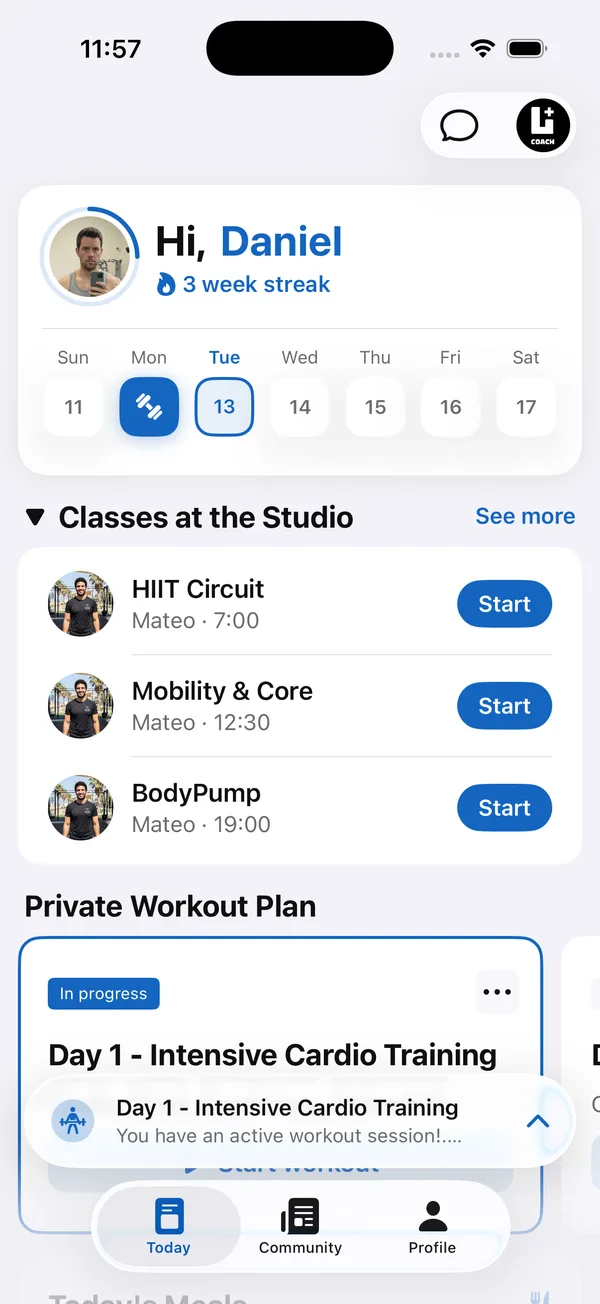
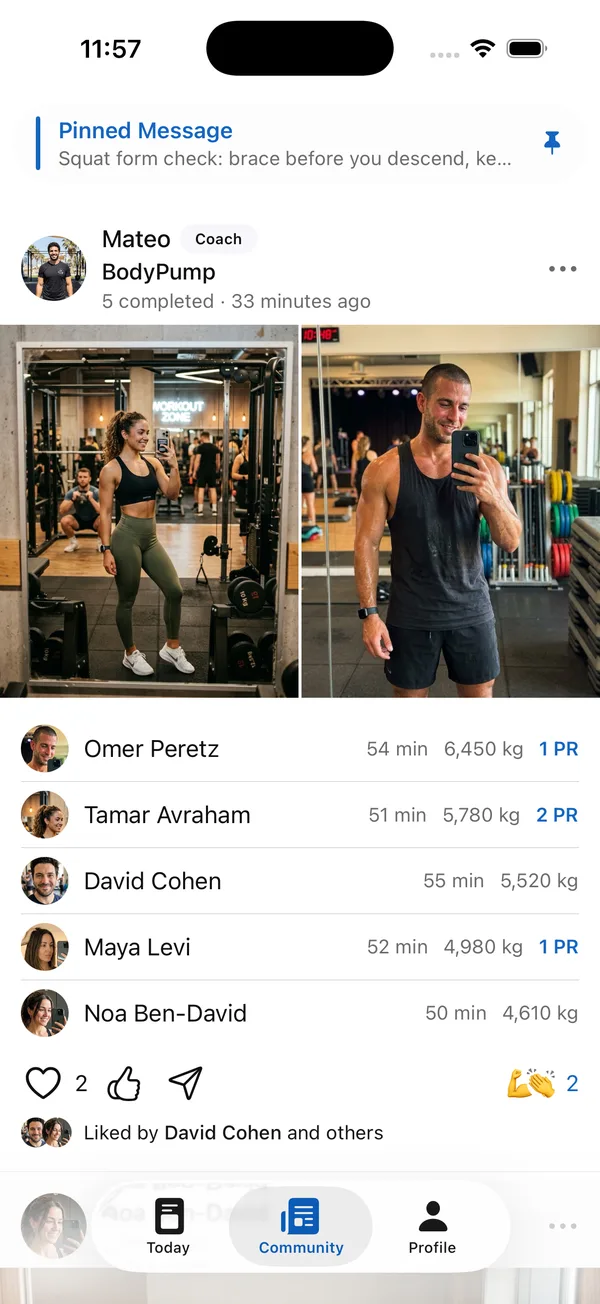
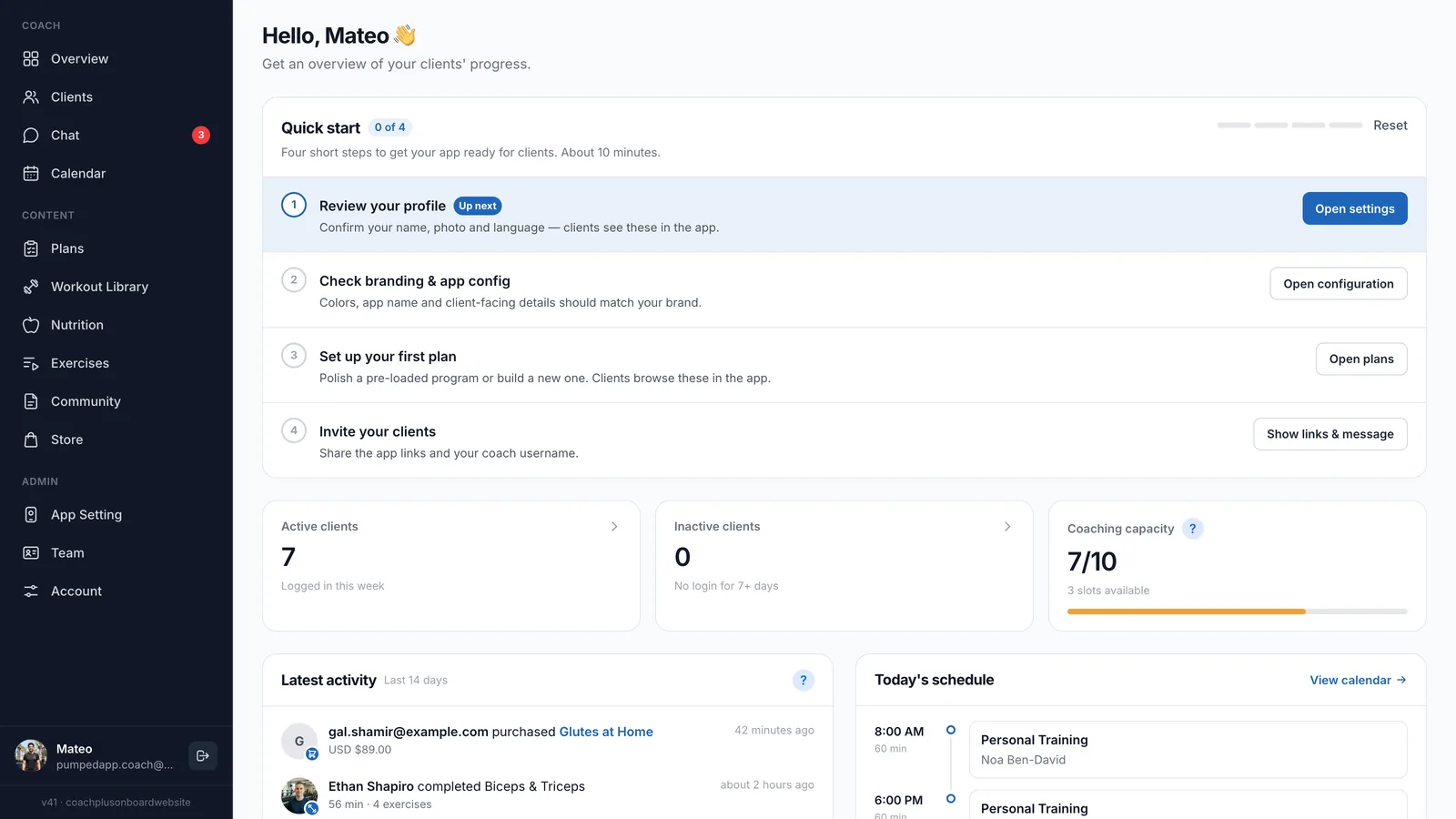
On the Coach+ coaching platform, you set protein and the other macro targets in each client’s meal plan, and clients log food in your branded app by barcode, photo or search, so you see how close they get every day. The AI assistant can draft a meal plan that you review before sending, and weekly check-ins with progress photos show whether the target is working.