This water intake calculator estimates how much water to drink a day from your body weight and how long you exercise. It shows the result in liters, US fluid ounces and 240 ml cups.
The number is a starting estimate, not an exact requirement. Food also provides water, and thirst, climate and your health all affect what you need. Results are not medical advice; if you have a kidney or heart condition, follow your doctor’s guidance on fluids.
How to use the water intake calculator
- 1
Enter your body weight
The base amount is 35 ml for every kilogram (about 0.54 oz per lb).
- 2
Enter your exercise time
Add the hours you train on a typical day. Each hour adds 600 ml (about 20 oz).
- 3
Read your daily water target
You get the total in liters, ounces and cups of 240 ml.
- 4
Adjust for your day
Drink more on hot days or when you sweat a lot, and use thirst and urine color as a check.
How much water should I drink a day?
Most adults do well with about 35 ml of water per kg of body weight per day, plus extra for exercise. For a 70 kg person who doesn’t train that day, that’s about 2.45 liters (83 oz, or about 10 cups).
For comparison, the U.S. National Academies set an adequate intake for total water of about 3.7 liters a day for men and 2.7 liters for women. Those totals include water from food and all drinks, not just plain water, so they aren’t a target for glasses of water alone.
How is your water intake calculated?
The water intake calculator multiplies your body weight in kg by 35 ml, then adds 600 ml for each hour of exercise:
Base: body weight (kg) × 35 ml.
Exercise: hours of exercise × 600 ml.
Daily total: base + exercise, shown in liters.
Conversions: 1 US fl oz = 29.6 ml; 1 cup = 240 ml.
Example: 80 kg × 35 ml = 2,800 ml. With 1.5 hours of training, add 900 ml for a total of 3.7 liters, about 125 oz or 15 cups.
What changes how much water you need?
Climate, sweat, food and health all change your water needs, which is why any formula is only an estimate.
Heat and humidity. You lose more water through sweat on hot days, even without training.
Sweat rate. Two people doing the same workout can lose very different amounts. Weighing yourself before and after a long session shows roughly how much you lost.
Food. Fruit, vegetables, soup, yogurt and other foods with a high water content add to your daily intake.
Other drinks. Tea, coffee, milk and other drinks also count toward your fluid intake.
Health conditions. Some kidney and heart conditions, and some medications, require limiting or adjusting fluids. Follow medical advice in those cases.
Pale yellow urine and not feeling thirsty most of the day are simple signs you’re drinking enough. More is not always better: drinking very large amounts in a short time can be dangerous.
How coaches use water targets with clients
Water is one of the easiest habits for personal trainers and online coaches to start with. It needs no tracking app or scale, it helps clients feel better in training, and an early win builds momentum for harder changes like calories and protein.
Give a number, then a routine. Turn liters into something concrete, like a 750 ml bottle finished by lunch and another by the end of the workday.
Adjust for training days. Add the exercise amount on days with long or hot sessions.
Ask about it. Include water in the weekly check-in questions so the habit doesn’t fade.
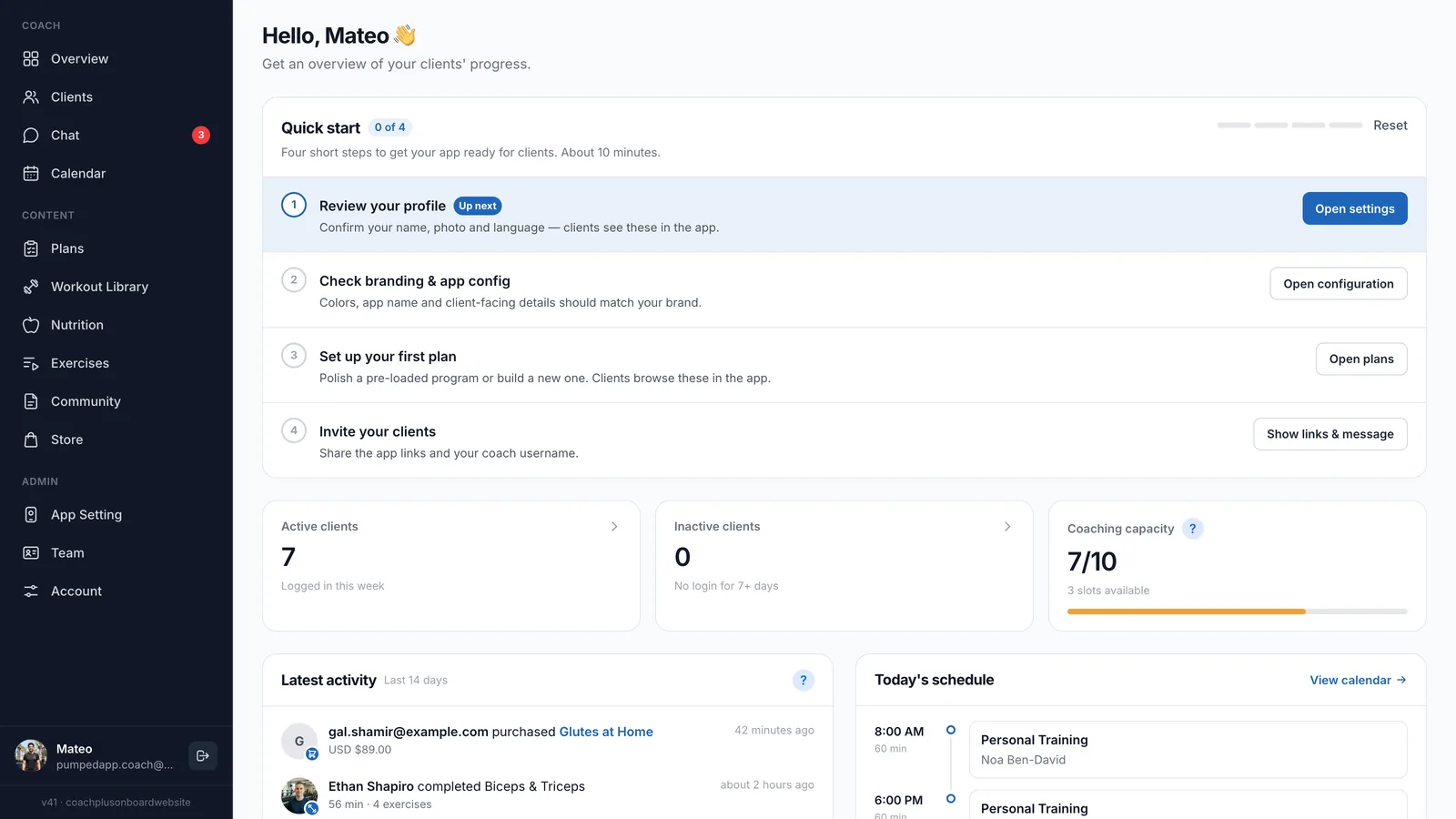
On the Coach+ coaching platform, you build meal plans with macro targets, clients log food and workouts in your branded app, and weekly check-ins with progress photos give you a regular place to review habits like water. The AI assistant can draft training programs and meal plans that you review before sending.